
Exhibitions
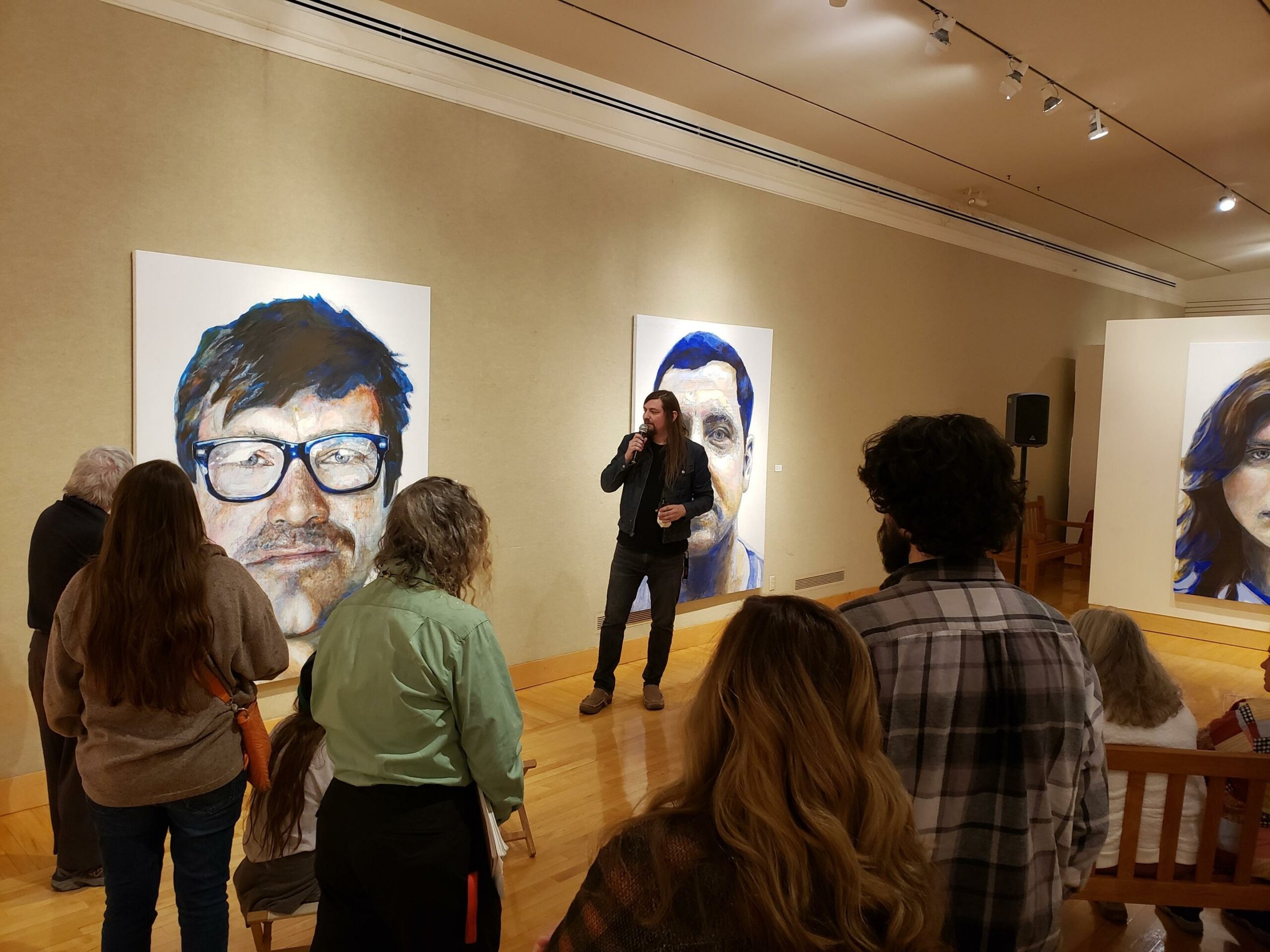
Today/Tomorrow/Yesterday: Michael McCaffrey
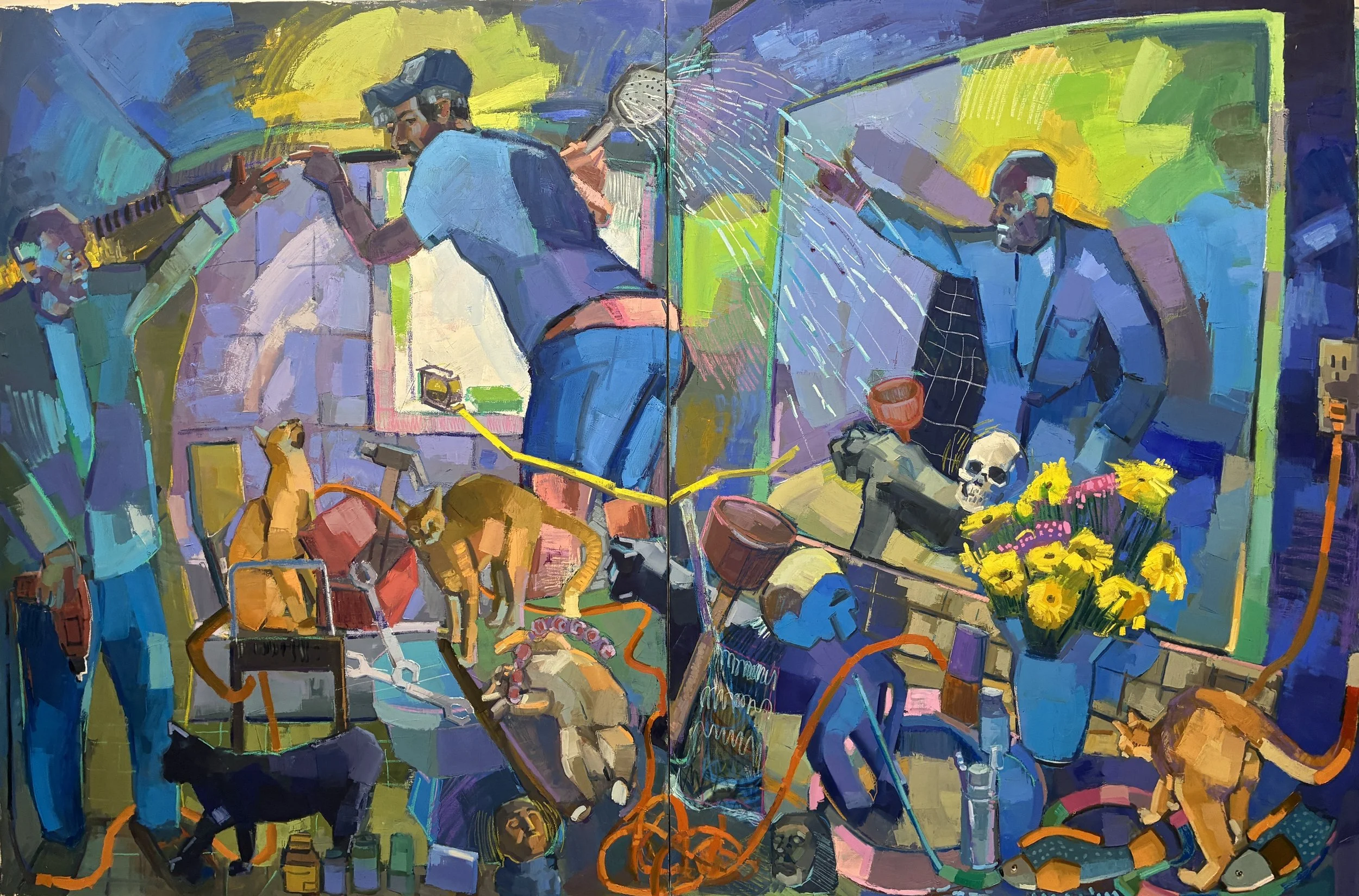
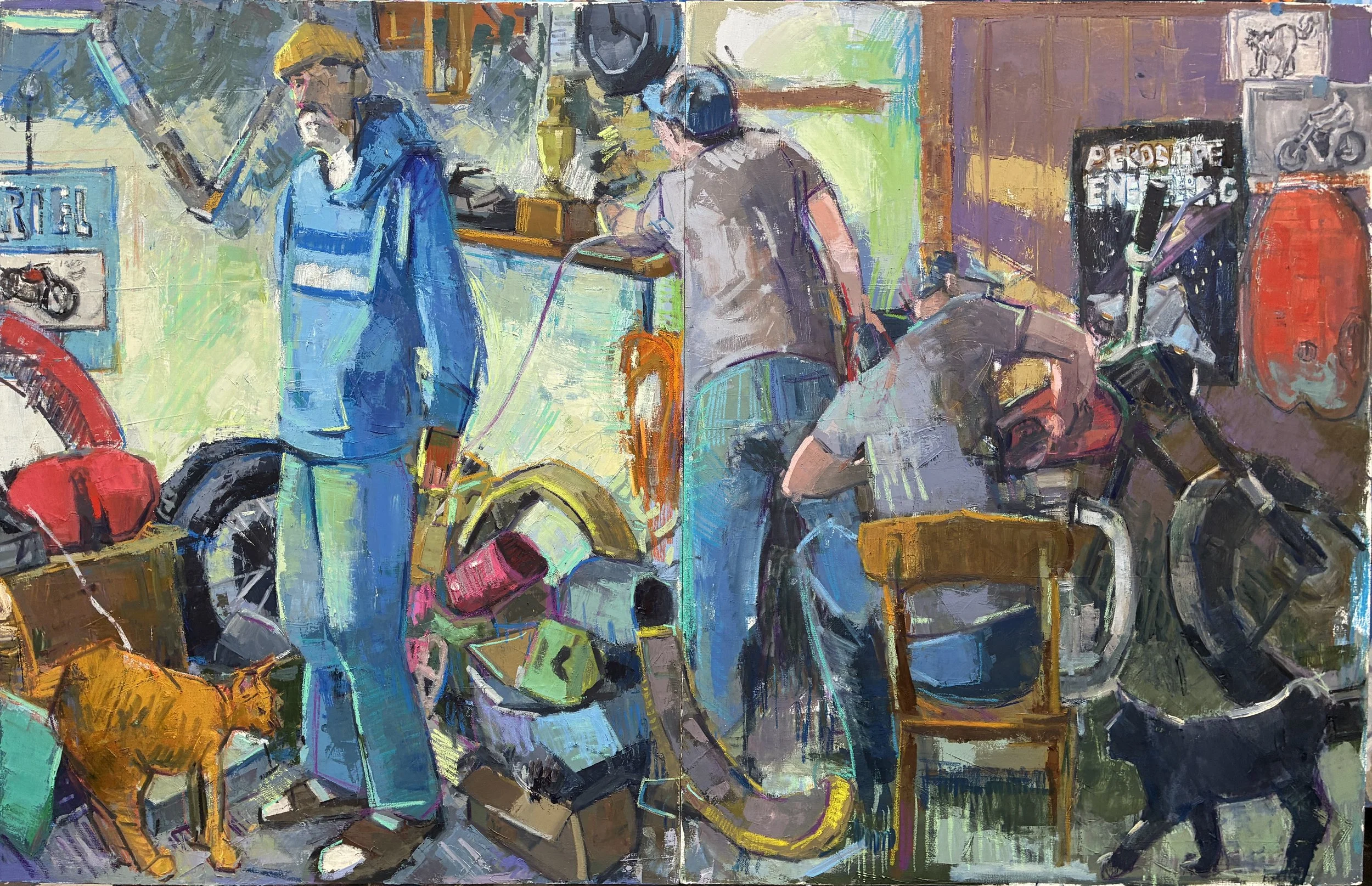
Since 2014, artist Michael McCaffrey has created a deeply personal body of paintings, drawings, and collages centered on his 87-year-old father, who serves as both muse and collaborator. Today/Tomorrow/Yesterday explores the evolving relationship between father and son while reflecting on the stories, memories, and shared experiences that shape a lifetime.
The exhibition examines the complex nature of memory—how it is preserved, altered, and reconstructed over time. While many of the works are rooted in real events, they embrace the embellishments, distortions, and unexpected connections that naturally emerge through the act of remembering. Time folds, overlaps, and loops back on itself, creating dreamlike compositions where past and present coexist, even when the people, places, and objects within them seem disconnected. Throughout the exhibition, another recurring presence appears: cats, woven playfully into many of the works.
“Painting is remembering,” McCaffrey says. “I'm interested in what is remembered accurately, what is distorted, and what is invented through the act of remembering.”
By blending observation with imagination, Today/Tomorrow/Yesterday invites visitors to consider not only the relationship between memory and time, but also how painting itself becomes a record of lived experience. Each work captures both a moment in life and the passage of time required to create it, revealing the tension between the stillness of the painted image and the fluid, unreliable nature of memory.
Michael McCaffrey is a nationally recognized contemporary painter whose work explores family, memory, and the passage of time through richly layered figurative compositions. His thoughtful and often humorous approach offers an intimate glimpse into the evolving relationship between artist and subject while raising universal questions about how we remember the people and moments that shape our lives.
This exhibition will be on view from August 22nd - November 8th, 2026
Visible Evidence:
Jill Enfield
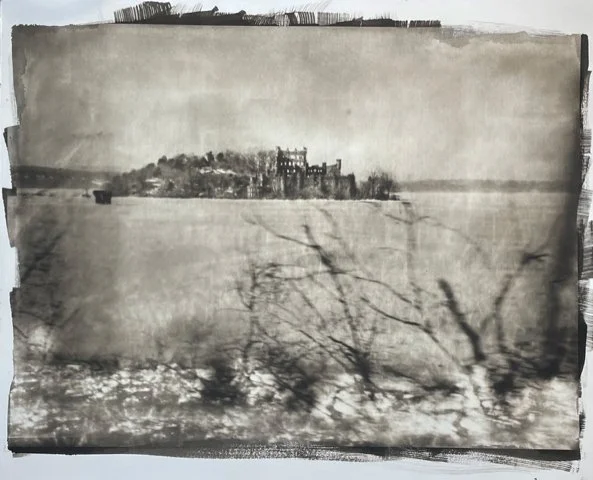
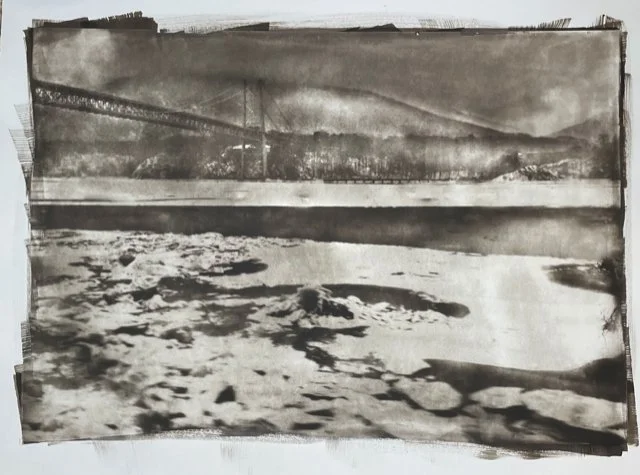
For centuries, the Hudson River has been a route for people and goods traveling through the region. Native peoples traveled and lived along its banks, and later shipping, manufacturing, commerce, and immigration shaped the towns that developed beside it. Today, the Metro-North Railroad follows the river connecting many of these towns with New York City.
I began photographing the Hudson River from the window of the train during my weekly commute. What began as a way of recording what I saw gradually became a larger investigation into the history of the places I was passing.
These photographs are not intended to be a literal record of the Hudson River Valley. Instead, they grew out of repeatedly seeing the same landscape from a moving train and noticing how traces of different periods exist alongside one another. Industrial buildings, bridges, older neighborhoods, newer development, and stretches of open river appear and disappear within seconds. The river and landscape became a way for me to think about how a place changes over time while still carrying visible evidence of what came before. Seen through a moving window, these places were never completely still. The long exposures record some of that movement as blur and softness rather than freezing the landscape in perfect detail. Instead of correcting those qualities, I allow them to remain visible in the finished photographs.
The photographs became much more than digital images. Once back in my darkroom, I turned to historical photographic processes to connect the contemporary landscape I was photographing with earlier periods in the Hudson Valley’s history.
I first create wet plate collodion ambrotypes on glass, using a process developed in the nineteenth century, a period when industry, transportation, and development were rapidly changing the Hudson Valley. I then scan and enlarge the ambrotypes to create platinum/palladium prints. Each image moves through three distinct stages: a digital photograph made from a moving train, a wet plate image on glass, and a handmade platinum/palladium print. Using these older processes slows down and physically alters an image that was originally made in a fraction of a second.
The Hudson Valley has experienced continual cycles of growth, decline, abandonment, and renewal. Towns that once depended on manufacturing, shipping, and industry lost many of those economic foundations, and over time, buildings and industrial sites were abandoned or repurposed. More recently, some of these communities have changed again as artists, families, and new businesses have arrived. I am interested in photographing the Hudson Valley at this point in that continuing process, when evidence of its industrial past, periods of decline, and more recent redevelopment can often be seen within the same landscape.
This exhibition will be on view from September 19th - November 8th, 2026
Upcoming Exhibitions
-
November 21st - February 21st, 2027
Featured Artists:
Colette Wright Adams, Chicago, ILCharles Baughman, Wichita, KS
Denita Benyshek, Wichita, KS
Allan Chow, Sugar Land, TX
Karen Cooper, Grinnell, IA
Adam Crowley, Kansas City, MO
Marcus DeSieno, Tampa, FL
Rebecca DiDomenico, Boulder, CO
Aimee Fresia, Lee's Summit, MO
Kristin Goering, Fairway, KS
Kathy Hodge, Riverside, RI
Martha Hughes, Marfa, TX
Shelley Hull, Denver, CO
Todd Johnson, Knoxville, TN
Sia Joung, Kansas City, KS
KK Kozik, Sharon, CT
Jonathan Langfield, Bozeman, MT
David Larson, Arlington, MA
Tom Maakestad, Marine on St. Croix, MN
Lilly McElroy, Lawrence, KS
Janet Morgan, Brooklyn, NY
Christopher Nalty, Astoria, NY
Amy O'Neill, Milwaukee, WI
Tom Owen, Newport, KY
Jonny Palmer, St. Joseph, MO
Julia Paul, Blacksburg, VA
Wen Redmond, Strafford, NH
Alan Richards, East Hills, NY
Kim Roberts, Crestone, CO
Jacob Spacek, Seguin, TX
Lori Stanziola, Overland Park, KS
Laurinda Stockwell, Lamy, NM
Jennye Stubblefield, San Antonio, TX
Dana Telsrow, Iowa City, IA
Jill Tichenor, Bucyrus, KS
Michele Tilley, Centennial, WY
Laurie Ullrich, Lees Summit, MO
Louise Wallendorf, Gambrills, MD
Desiree Warren, Kansas City, MO
Jess Witte, Creve Coeur, MO
Merrie Wright, Brownsboro, TX
Kelly Yarbrough, Manhattan, KS
Tiffany Zen, Kansas City, MO
-
November 21st - January 10th, 2027
-
January 16th - February 21st, 2027
-
February 27th - May 2nd, 2027
-
February 28th - April 11th, 2027
-
April 17th - June 13th, 2027
-
May 8th - August 8th, 2027
-
June 19th - August 8th, 2027
PERMANENT COLLECTION
One of the Midwest’s finest collections of 18th to 21st Century American Art
Discover selections from the over 3000+ piece collection
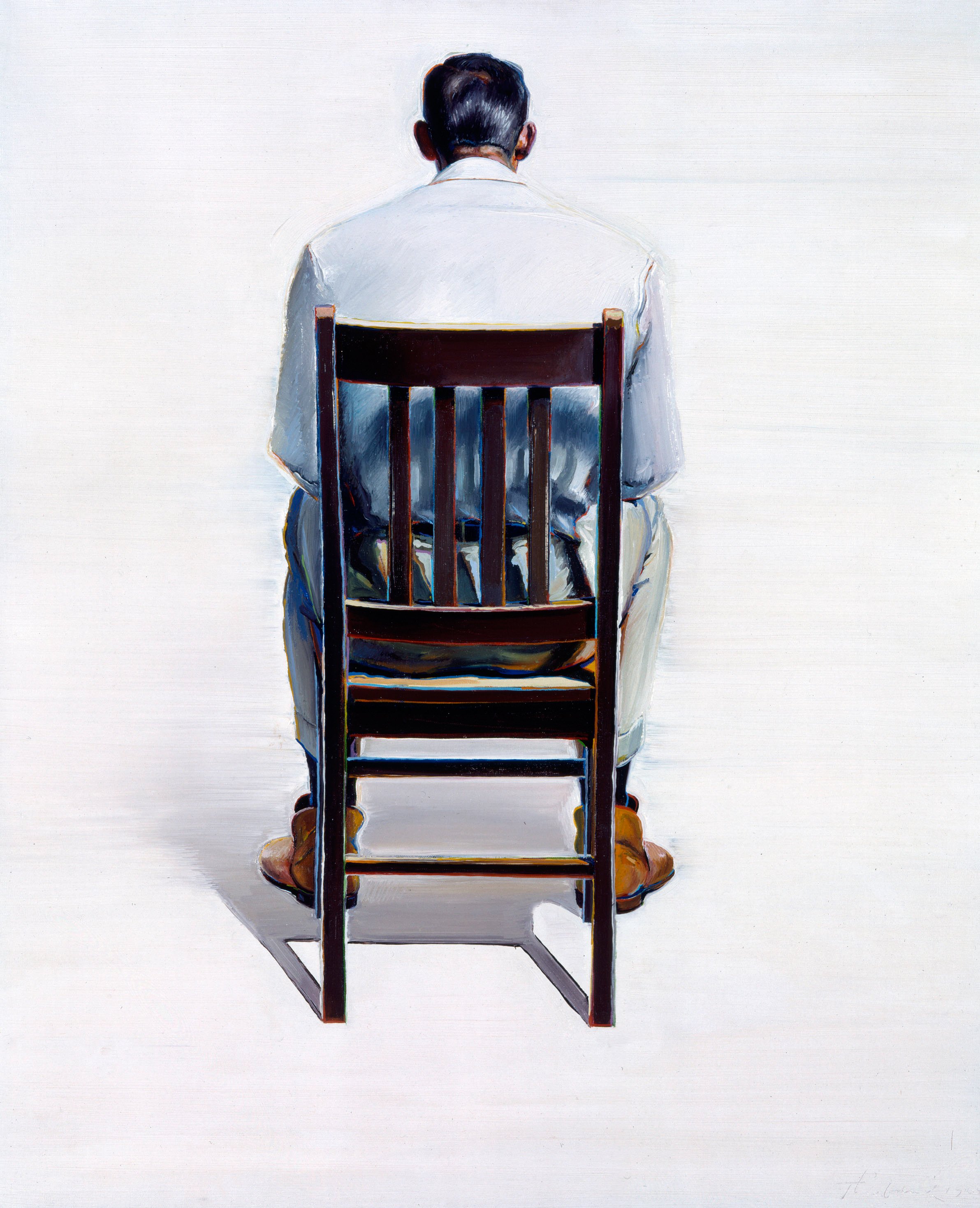
Wayne Thiebaud, Man Sitting-Back View, 1964, Oil on Canvas.

Emily Dubowski, Sunday Visit, 1972. Acrylic.

Rembrandt Peale, George Washington. Oil on Canvas.
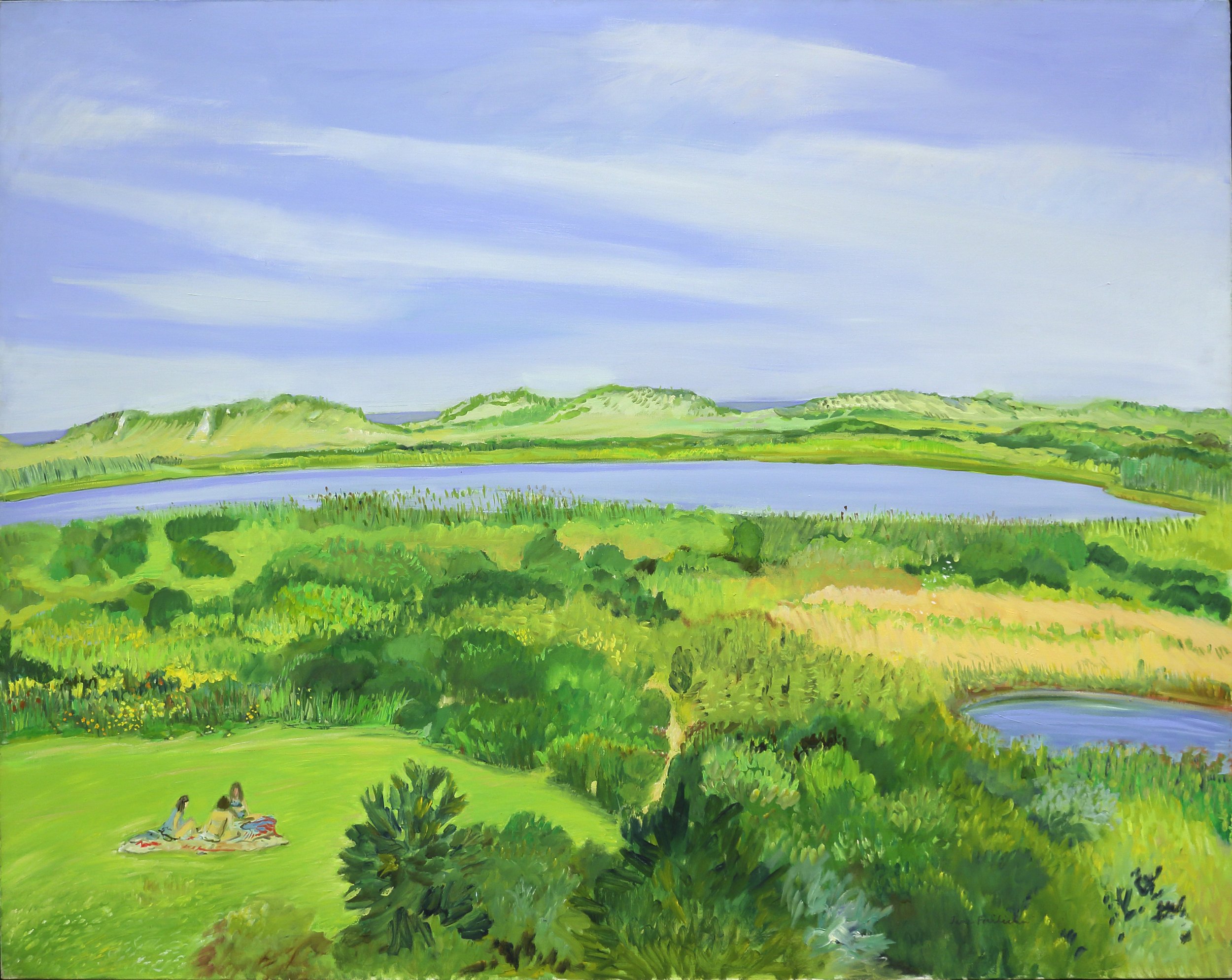
Jane Freilicher, The Game on the Lawn, 1976. Oil on Canvas.

Frederick Judd Waugh, Ladies Having Tea, 1890. Oil on Canvas.

Mary Cassatt, Young Mother and Two Children, 1908.
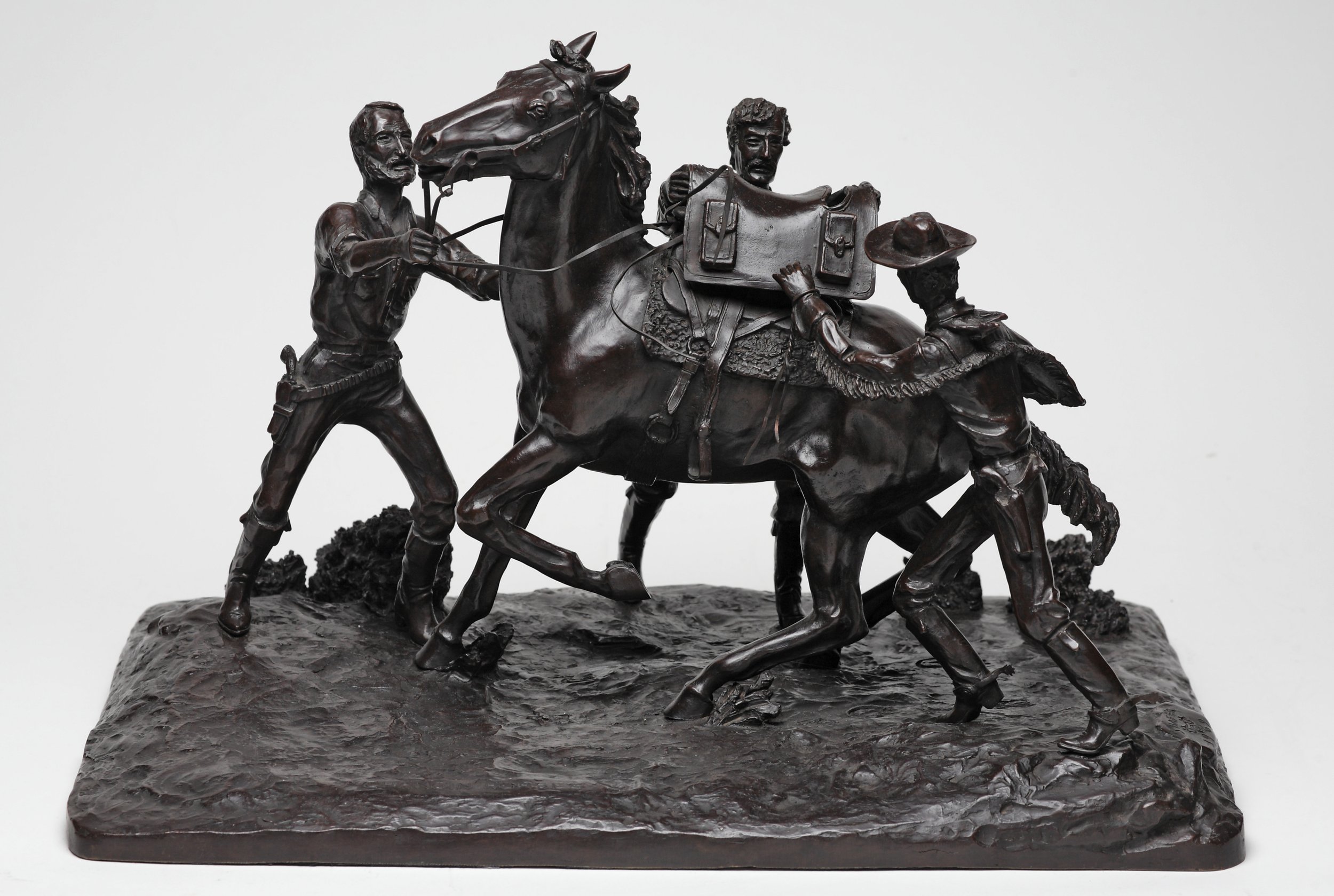
L.E. “Gus” Schafer, Changin’ Horses, 1969. Bronze.

Jacob Lawrence, The 1920s…The Migrants Cast Their Ballots, 1974. Serigraph.

Alice Murphy, Umbrellas, 1937. Lithograph.

Thomas Hart Benton, Custer’s Last Stand, 1945. Oil on Canvas.

William James Glackens, Hillside with Olive Trees (Rue de Varenne), 1925. Oil on Canvas.
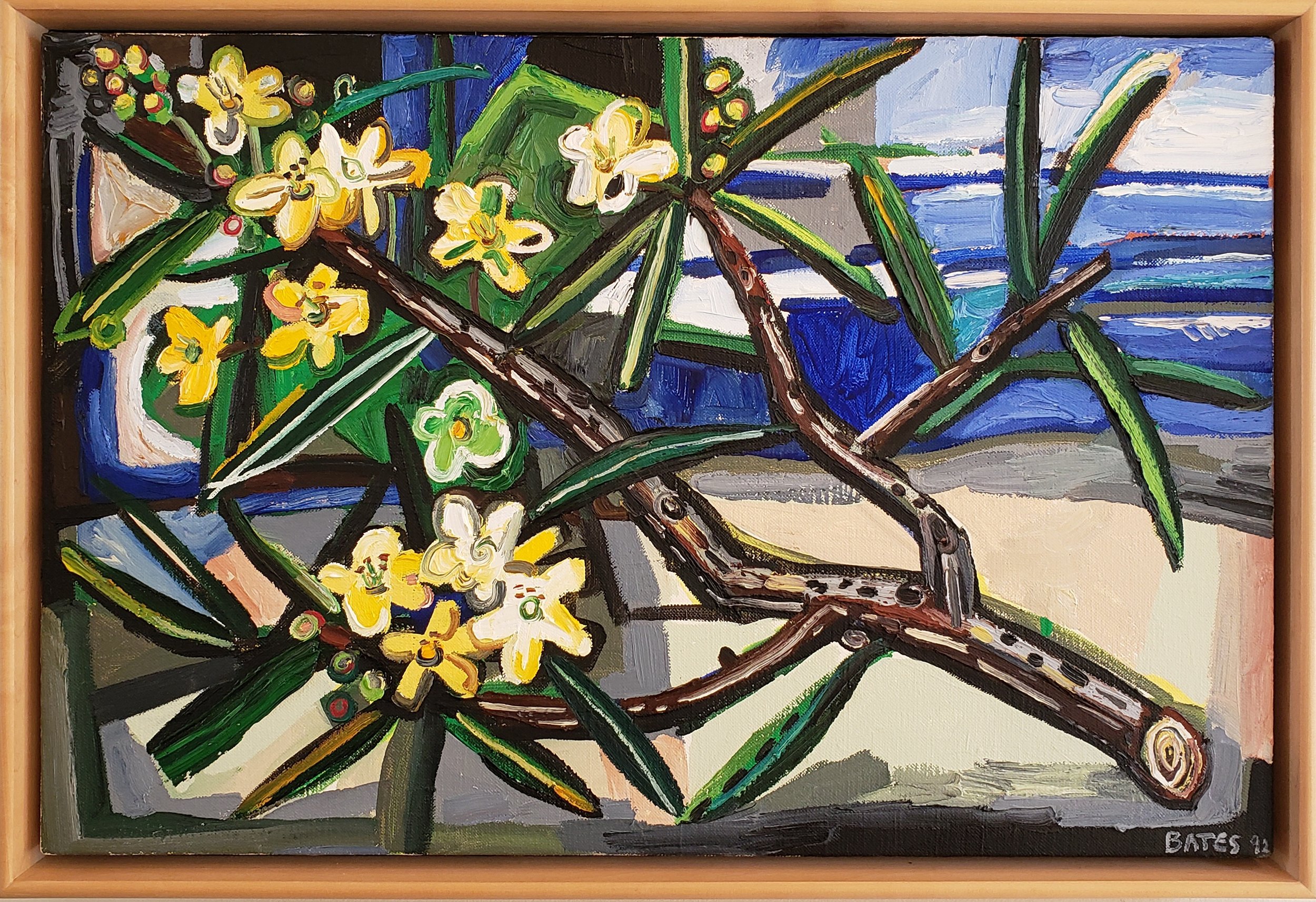
David Bates, Oleander, 1992. Acrylic and oil on canvas.
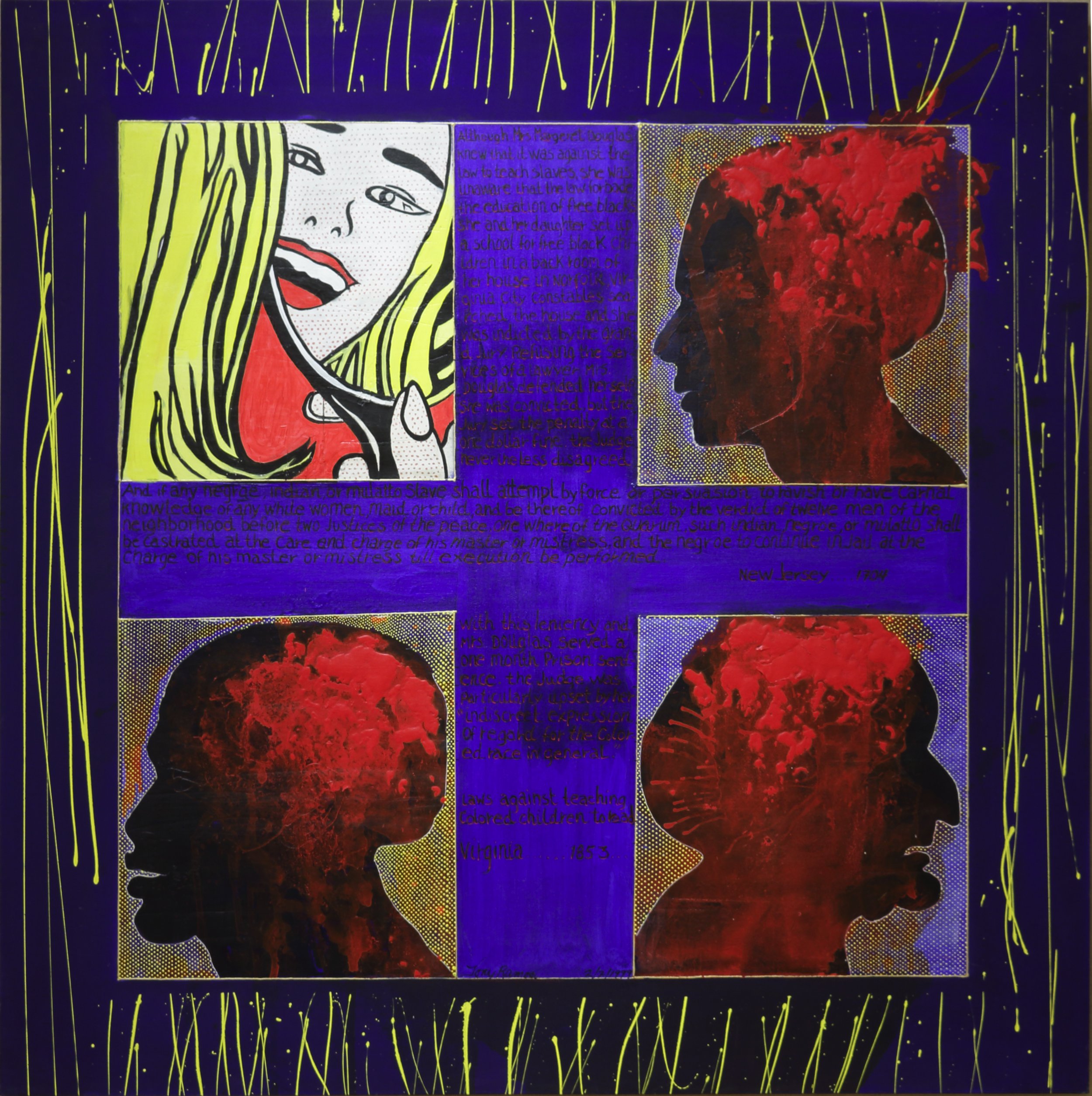
Tony Ramos, Mrs. Douglas tries to do the right thing, 1999. Oil on Canvas.
PAST EXHIBITIONS
-
52nd Annual Membership Exhibition: January 10th - February 22nd, 2026
Regional High School Exhibition: March 1st - April 12th, 2026
A Scattering of Jades: Cesar Lopez and Kiki Serna: February 27th - May 10th, 2026
National Juried Undergraduate Exhibition: April 17th - June 14th, 2026
The Shape of the Prairie: Keith Jacobshagen: May 16th - August 16th, 2026
Hollis Williford: Sculptures, Paintings & Drawings: May 16th - August 16th, 2026
Kent Bicentennial Portfolio: Spirit of Independence: July 1 - September 13, 2026
-
51st Annual Membership Exhibition: January 18 - February 23, 2025
Regional High School Exhibition: March 2 - April 13, 2025
Screen, Block, Plate, & Stone: Printmaking: March 1 – May 4, 2025
National Undergraduate Juried Exhibition: April 19 - June 15, 2025
Our Very Nature: Rachelle Gardner-Roe: May 9th - August 10th, 2025
The Cabinet of Natural History: June 21st - September 14th, 2025
4 Seasons: Kinder, Zook, Thompson & Kline: September 20th - November 2nd, 2025
Above the Fruited Plain: Jacqueline Bishop: August 16th - November 2nd, 2025
Joseph A. Imhof (1871–1955): Artist of the Pueblos: November 15, 2025 - January 4, 2026
Thomas Gieseke:The Monsters’ Merry-Go-Round: November 15, 2025 – February 22, 2026
-
50th Annual Membership Exhibition: January 13 - April 14, 2024
Regional High School Exhibiton: February 25 - April 14, 2024National Undergraduate Jured Exhibition: April 19 - June 9, 2024
Regional Revelations: A Private Collection Showcase: April 20 - July 14, 2024
Small Wonders: Artwork by Debra Keirce, Denise Horne-Kaplan and Brenda Morgan: June 15 - September 15, 2024
Art of the Camera: Selections from the Hatten family collection: July 20 - September 15, 2024
The Architecture of St. Joseph: The Golden Age Revisited: July 20 – September 15, 2024
From the Canoe: Steve Snell: September 21 - November 3, 2024
Draw Closer: Ruthie Ingram: September 21 - November 3, 2024Byron Williamson & Deb Riley: New Works: November 16, 2024 - January 12, 2025
Big Ideas: Large Works from the Permanent Collection: November 16, 2024 - February 23, 2025
-
Brave Work: Women and Their Contributions by Patricia Streeper: November 18, 2023 - January 7, 2024
Robert Quackenbush: Unearthed Fragments: November 18, 2023 – January 7, 2024
Kansas City Society for Contemporary Photography: September 23 - November 5, 2023
Then is Now: Works by Ani Hoover: September 23 – November 5, 2023
(Women) Artists from the Collection, 1800-2022: June 10 – September 17, 2023
7th Annual National Undergraduate Juried Exhibition: April 22 – June 4, 2023Family, Faith, Figures: Harry J. Oshiver: April 22 – June 4, 2023
2023 Regional High School Exhibition: February 26 – April 16, 2023
John Hulsey: “Transcendence – Truth in Nature”: February 25 to April 16, 2023
Jason Squires: Photography: November 25, 2022 – February 26, 2023
-
Heinrich Toh: Never as it was: September 17 – November 6, 2022
Norman Akers: “Constructed Places: Works on Paper”: September 17- November 6, 2022
Ariel Bowman, Deanna Dikeman and Found Object Exhibitions- June 18- September 11, 2022
Stephen Johnson and Karen Matheis and Undergraduate Exhibitions- April 22- June 12, 2022
2022 Regional High School Exhibition- February 27- April 16, 2022
Returning/Belonging: Artwork by Benjamin Parks and Kathy Liao – January 14- April 16, 2022
48th Annual Membership Exhibition – January 15 – February 20, 2022
10th Annual MVIS Juried Exhibition – November 20, 2021 – January 9, 2022
Refracted Reality: The Work of Jim Cantrell – November 20, 2021 – January 9, 2022
-
The Joe Show: Selections from the Gray Manufacturing Corporate Collection – September 18 – November 7, 2021
Missouri Art Now: A Bicentennial Celebration – September 18 – November 7, 2021
Peregrine Honig – June 19 – September 12, 2021
A Growing Collection: the Past 10 Years – June 19 – September 12, 2021
Agrarian Spirit in the Homestead Era: Artwork from the Moseman Collection of Agrarian Art – April 16 – June 6, 2021
5th Annual National Undergraduate Juried Exhibition – April 16 – June 6, 2021
2021 Regional High School Exhibition – February 27 – April 10, 2021
47th Annual Membership Exhibition – January 15 – February 21, 2021
Nocturnes: Derrick Breidenthal and Ben Weddle: Panoramics – January 15 – April 11, 2021
OKeoscapes by Douglas Shaw Elder – November 21, 2020 – January 10, 2021
Staff Favorites: Selections from the Permanent Collection – November 21, 2020 – January 10, 2021